Kitchen design trends: what is changing, and how to tell a lasting shift from a fad
Kitchen trends are reported every year by trade associations, magazines and manufacturers, and they move quickly: the grey kitchen that dominated one decade looks dated in the next. Yet a kitchen is expected to last fifteen or twenty years. The useful question is not "what is in fashion" but "which current changes reflect lasting shifts in how people live and cook". This article sets out the main directions seen across the industry today and offers a simple method for deciding which to adopt.
Where trend information comes from
The National Kitchen & Bath Association publishes an annual design trends report based on surveys of designers and industry professionals, and remodeling and building organisations publish their own market studies. These are useful for spotting broad directions; they reflect what professionals are being asked for, not what will age well. Treat them as a map of options rather than a set of instructions.
Warmer materials and more colour
After years of white and grey, kitchens have been moving towards warmth: natural wood cabinets and veneers in oak and walnut, greens and deep blues on cabinetry, earthy neutrals, and textured surfaces such as fluted or reeded fronts, zellige-style tile and honed stone. This is partly a reaction to cool minimalism and partly a reflection of open-plan homes, where the kitchen is also the living room and needs to feel less clinical. Wood and muted colour tend to age gracefully; very specific shades are the part most likely to date. Our guide to kitchen colour basics helps build a palette that will not depend on one season's favourite.
The back kitchen returns
A notable change in larger homes is the scullery, back kitchen or working pantry: a secondary room behind the main kitchen where messy prep, small appliances, a second sink or dishwasher and bulk storage can live out of sight. It is a modern version of the butler's pantry and the old farmhouse scullery. In smaller homes the same idea appears as an appliance garage or a tall cabinet with pocket doors that hides a coffee station. It reflects a lasting tension in open-plan living — the desire for a calm, display-worthy kitchen that is also a working room.
All-electric cooking and better ventilation
Induction cooktops have moved from niche to mainstream, helped by efficiency programmes and concern about indoor air quality from gas combustion. At the same time, designers are paying more attention to range hoods that actually capture fumes, rather than decorative ones. Both are functional shifts likely to last. See our articles on cooktops and appliance trends.
Concealed and organised storage
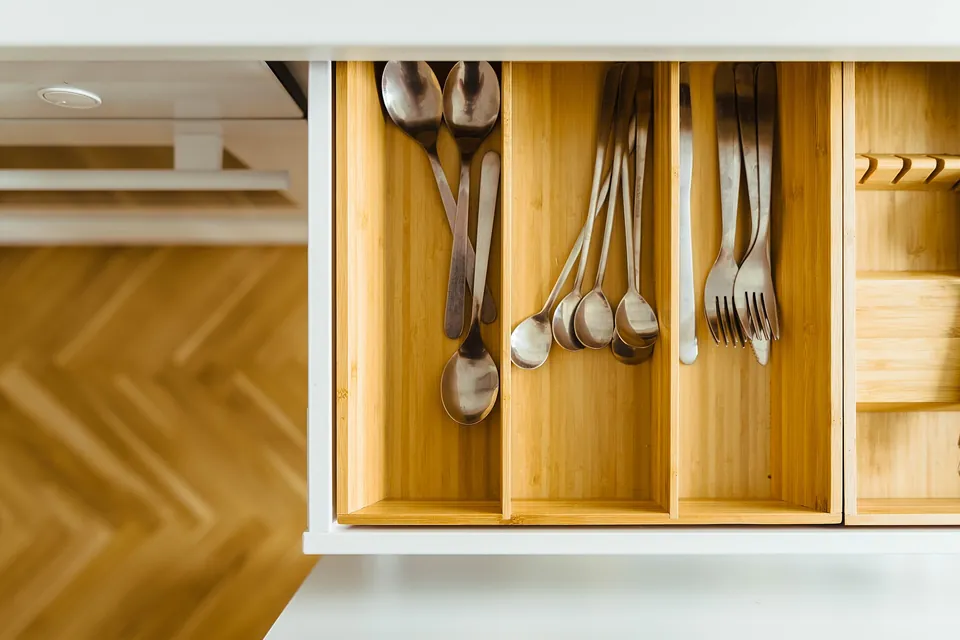
Deep drawers instead of base cupboards, integrated bins for recycling and compost, pull-out pantries, charging drawers and internal organisers are now expected rather than special. Open shelving remains popular in limited doses, more as display than as main storage. Our article on storage that looks good explores both sides.
Healthier and more durable materials
Buyers increasingly ask about what their kitchen is made of. Composite wood with certified low formaldehyde emissions, low-VOC finishes, and durable, repairable surfaces are growing priorities. The serious health problems found among workers fabricating engineered stone — silicosis cases reported by the US Centers for Disease Control and Prevention, and Australia's ban on engineered stone from 2024 — have also led some designers and clients to reconsider that material in favour of natural stone, porcelain slabs and other surfaces.
Designing for every age
Universal design — kitchens usable by people of all ages and abilities — is moving from specialist work into ordinary projects, as households plan to stay in their homes longer and multi-generational living grows. Typical features include wall ovens and microwave drawers at reachable heights, wider aisles, lever handles, D-shaped pulls, drawers rather than low cupboards, varied counter heights and good lighting. The NKBA's planning guidelines include access standards for these details. Unlike a colour, a kitchen that is easy to use never goes out of style.
Smarter, but not necessarily connected
Connected appliances, voice control and app-controlled lighting are widely marketed. The features that seem to stick are modest ones: leak sensors under the sink, under-cabinet lights on motion sensors, induction hobs that sync with the hood. Before paying extra, ask whether the feature works without an app and how long it will be supported.
A method for judging any trend
- Is it functional or decorative? Functional changes (storage, ventilation, accessibility, efficiency) tend to last; decorative ones cycle.
- How expensive is it to change later? Put fashionable colours and patterns on cheap, easily changed elements — paint, hardware, textiles, lighting — and keep cabinets, counters and floors timeless.
- Does it suit the house? A kitchen that belongs to the architecture of its home ages better than one that follows a catalogue.
- Do you actually like it? A trend you love will still give you pleasure when it is no longer fashionable; one adopted for resale may please no one.
Contemporary is not the same as trendy
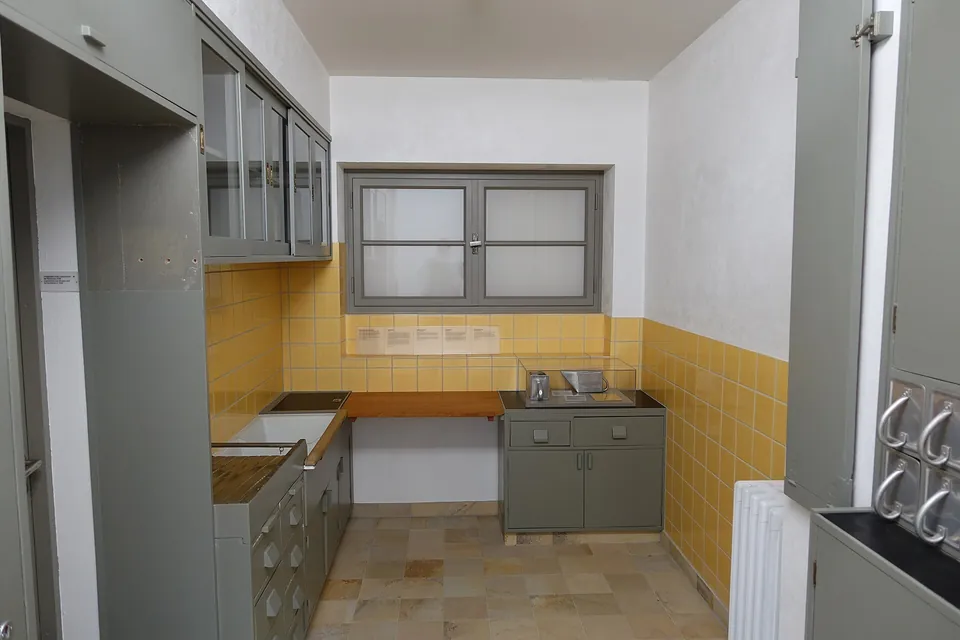
Contemporary style — clean lines, restraint, honest materials — has its own history and logic, separate from year-to-year fashion. Our article on the contemporary kitchen style and its roots traces it from the 1920s, and our guide to contemporary kitchen design covers its practical details.
Sources
- National Kitchen & Bath Association, annual Design Trends research and Kitchen Planning Guidelines with Access Standards.
- US Centers for Disease Control and Prevention, MMWR, July 2023, silicosis in engineered stone fabrication workers.
- Safe Work Australia, prohibition on engineered stone (from 1 July 2024).
- US Environmental Protection Agency, formaldehyde standards for composite wood products (TSCA Title VI).
Last reviewed: 6 November 2026.