Kitchen storage ideas that can be beautiful too
Storage is usually treated as a problem to hide: more cupboards, more doors, everything out of sight. But some of the most attractive kitchens put their storage on show — rows of plates in a rack, jars on a shelf, pans hanging on a rail, a dresser full of crockery. Done well, visible storage is decoration that works. Done badly, it is clutter. This guide covers storage ideas that look good, and the habits that keep them looking good. For squeezing maximum capacity out of a tight room, see our guide to small kitchen design.
Decide what deserves to be seen
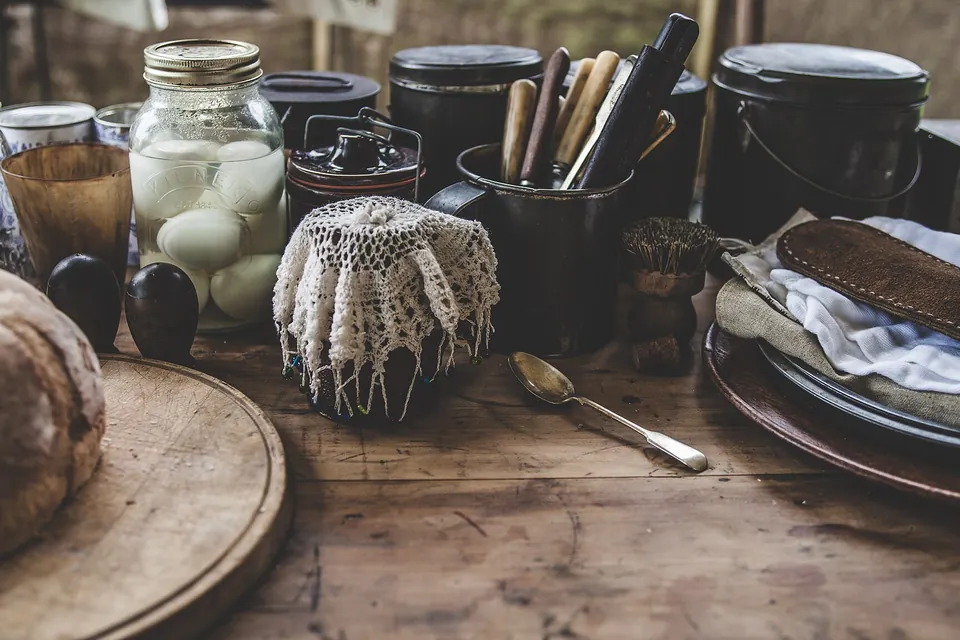
Visible storage works for objects that are attractive, used often and similar to one another: a set of white plates, glasses, wooden boards, copper or enamel pans, glass jars of dry goods, cookbooks. It works poorly for mismatched plastic containers, half-used packets and small appliances with trailing cables. A good first step is to divide your kitchen's contents into "show" and "hide" before designing any storage.
Glass-fronted cabinets
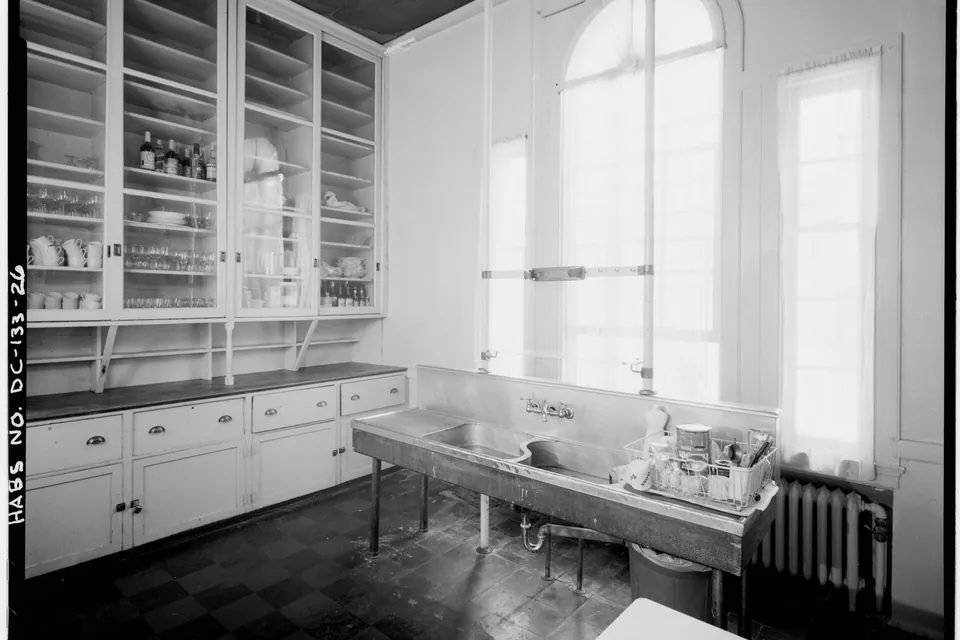
Glass doors are a compromise between open and closed: contents are visible but protected from dust and grease. They suit glassware and good crockery, and they lighten a long run of wall cabinets. Clear glass shows everything, so keep the contents orderly; reeded, frosted or seeded glass softens the view. A small LED strip inside makes the cabinet glow in the evening. Historic butler's pantries, with floor-to-ceiling glazed cupboards, show how handsome this kind of storage can be.
Plate racks and open shelves
A wall-mounted plate rack holds plates upright to drain and dry, a traditional feature of European farmhouse kitchens that is both practical and decorative. Open shelves bring the same openness to everyday dishes and glasses. Keep a few rules in mind:
- Place open storage away from the cooktop, where grease settles on everything.
- Store things you use daily; they will be washed often and never collect dust.
- Limit the colour palette of displayed items; a shelf of white and natural objects looks calm, a shelf of every colour looks busy.
- Choose sturdy brackets and fix them into studs or solid masonry. A shelf of plates is heavy.
Dressers and freestanding furniture
A dresser — closed cupboards below, open shelves above — is one of the oldest and most beautiful forms of kitchen storage. It can hold a family's crockery, cookbooks and serving dishes in one piece of furniture and gives a fitted kitchen the warmth of a collected room, as in a French country kitchen. Larders, armoires, glazed cabinets and even a sturdy bookcase can play the same role.
Pantries
A walk-in pantry, a tall cupboard with pull-out shelves or a shallow "pantry wall" between studs keeps food together and visible to whoever is cooking. Decanting dry goods into matching clear jars makes stock visible and looks orderly; label them with contents and dates. A pantry door lined with narrow shelves for spices and sauces adds capacity without depth.
Rails, hooks and pegboards
- Wall rails with S-hooks hold ladles, whisks, mugs, pans and herbs within reach of the work area.
- Magnetic knife strips keep knives safe from blunting in a drawer and out of children's reach if mounted high.
- Pegboards — famously used for the pans in the cook Julia Child's kitchen, now preserved at the Smithsonian's National Museum of American History — let you outline each pan's position so everything returns to its place.
- Ceiling pot racks free cupboard space in kitchens with high ceilings, but must be anchored into joists.
Drawers that are a pleasure to open
Hidden storage can be beautiful too. Deep pan drawers with pegs that hold plates, wooden cutlery inserts, spice drawers with angled racks, and drawer dividers in solid wood make opening a drawer satisfying. Full-extension slides and soft-close mechanisms complete the effect. Our guide to kitchen cabinet design explains what to look for in drawer hardware.
Corners, ends and gaps
- The end of a cabinet run can take open shelves for cookbooks or a narrow rack for trays.
- A gap beside the refrigerator can hold a pull-out larder or a tray divider.
- The space above wall cabinets can hold baskets or rarely used serving pieces, kept tidy and grouped.
- A window sill can hold herbs, or a narrow shelf across the window can display glass that catches the light.
Baskets, boxes and containers
Inside cupboards and on high shelves, matching containers turn a jumble into something orderly. Woven baskets suit root vegetables, bread and linens, which need air; lidded boxes protect rarely used items from dust; clear, stackable containers make pantry stock easy to see. Choose a single family of containers rather than a mixture, label the fronts, and measure shelf depth and height before buying so nothing is wasted. Above all, buy containers after you have decluttered, not before, or you will simply organise things you do not need.
Keeping it calm
Beautiful storage stays beautiful only with a few habits: edit regularly and remove what is not used; group similar items; leave some empty space on every shelf; return things to the same place; and wipe open storage near the cooking area weekly. The goal is a kitchen where the things you love and use are visible, and everything else has a home behind a door.
For more ways to change the character of a kitchen without remodelling, see our guide to kitchen decorating solutions.
Sources
- Smithsonian National Museum of American History, "Julia Child's Kitchen".
- Library of Congress, Historic American Buildings Survey documentation of the Woodrow Wilson House, Washington, DC.
- National Kitchen & Bath Association, Kitchen Planning Guidelines with Access Standards (storage reach and placement).
Last reviewed: 6 November 2026.