French country kitchen design: where the style comes from and how to make it work
The French country kitchen is less a set of rules than a memory: the farmhouse kitchens of Provence, Burgundy or Normandy, where a family cooked, ate and talked in one room furnished over generations. What makes the style appealing is its sense of accumulated, practical comfort. What makes it tricky is that imitating age with new materials can easily tip into pastiche. This guide looks at the elements that define the look and how to adapt them to a kitchen that has to work every day.
Where the style comes from
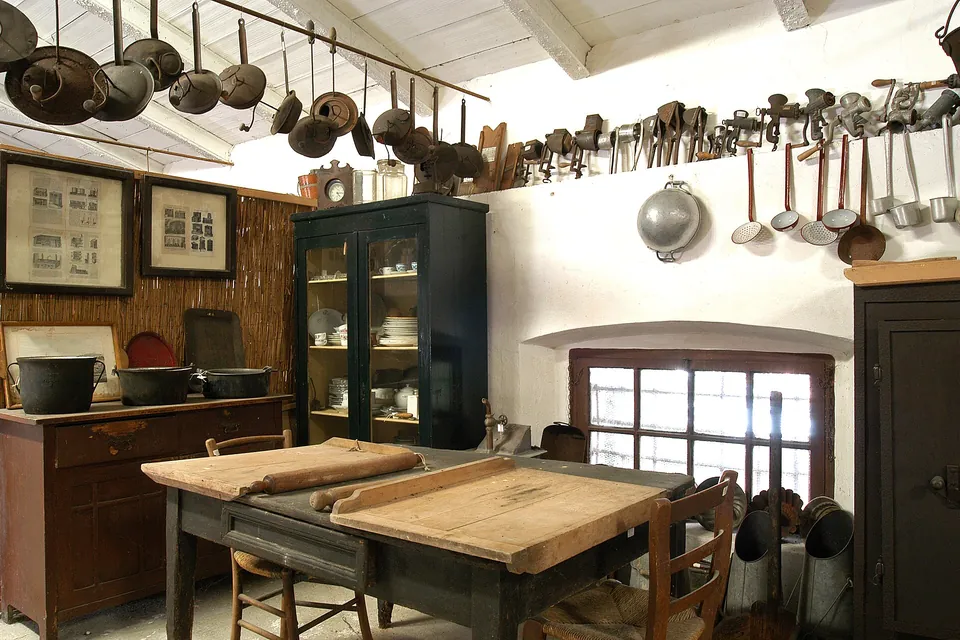
Traditional rural kitchens in France were working rooms. The hearth, and later a cast-iron range, provided heat and cooking; a stone or ceramic sink sat under the window; a long table served for preparing food and for meals. Storage was furniture rather than built-in cabinetry: a buffet or dresser for dishes, a vaisselier with open racks for plates, and sometimes a panetière, a small ventilated cupboard for bread, especially in Provence.
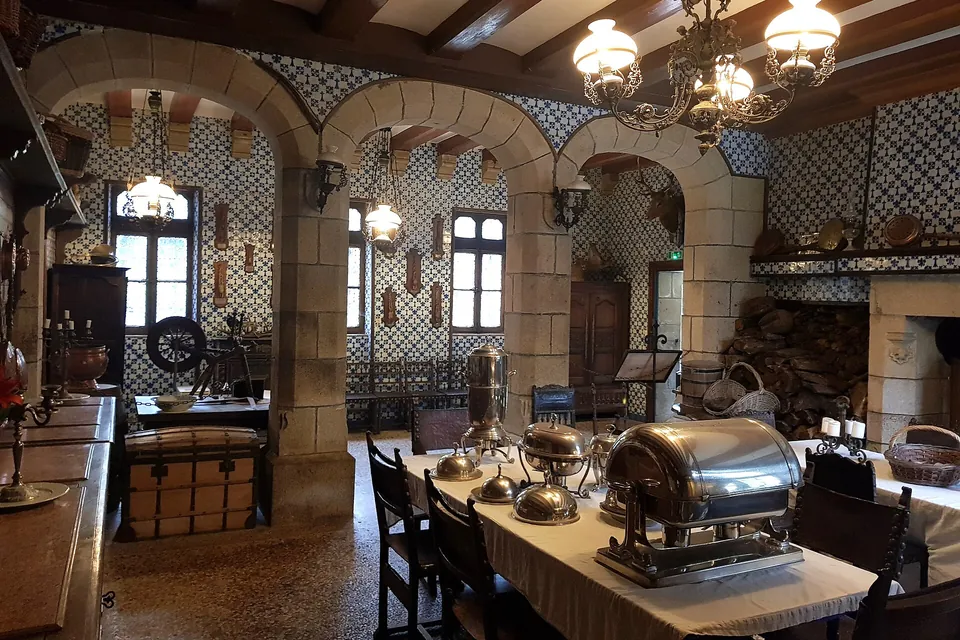
Materials were local. Floors were laid with terracotta tiles — in Provence the small hexagonal tomettes are characteristic — or with stone flags. Walls were finished with lime plaster or limewash, which breathes and can be renewed simply. Beams were left exposed. Textiles added colour, notably the printed cottons of Provence and the pastoral scenes of toile de Jouy, named after the town of Jouy-en-Josas near Versailles, where Christophe-Philippe Oberkampf founded a celebrated printed-cotton manufactory in 1760.
The defining elements
Floors
Terracotta is the signature floor. Reclaimed tiles bring genuine wear; new handmade tiles can be very close in feel. Both are porous and need sealing, and they are hard underfoot. Where budget or maintenance is a concern, porcelain tiles made to look like terracotta or stone give a similar warmth with far less upkeep. Wide-plank oak, oiled rather than lacquered, is a softer alternative common in northern French farmhouses.
Walls and ceilings
Lime plaster or limewash gives a soft, slightly uneven surface whose colour shifts with the light. On drywall, mineral paints or matte emulsions in warm whites, creams or pale ochre approximate the effect. Exposed beams — real or a well-made reproduction — add the low, sheltering feel of an old farmhouse, but do not fake them in a room with low ceilings, where they will feel oppressive.
Cabinetry and furniture
The style favours a mix of pieces rather than a single run of matching units. Practical ways to achieve this in a modern kitchen include:
- Fitted base cabinets with simple framed doors in a painted finish, combined with one freestanding dresser or armoire for dishes and glass.
- Open shelves or plate racks instead of some wall cabinets, holding everyday crockery.
- Curtained openings — a traditional detail — under the sink instead of doors.
- A long wooden table, or an island designed to look like one with legs and a thick wood top.
The cooking range
A large range with an oven door or two is the visual heart of many French country kitchens, often set in a recess or under a plastered hood. Check the ventilation requirements and clearances for any range in the manufacturer's installation guide, and remember that a decorative plaster hood still needs a properly sized fan and duct behind it.
Sinks and taps
A deep ceramic sink, often an apron-front model, and a bridge or wall-mounted tap in an aged finish suit the style. Stone sinks are traditional but heavy and porous. See our guides to farmhouse sinks and choosing a kitchen sink.
Colour and texture
French country palettes draw on the landscape: warm whites, the yellow and red ochres of the Luberon, lavender, olive and sage greens, faded blues. Natural textures — wood, linen, wicker baskets, glazed earthenware, copper pans — carry as much of the style as colour does. Our article on French country colours goes into palettes in detail.
Making it practical
An authentic old kitchen had no dishwasher, no extractor and very little counter by modern standards. Adapting the style means hiding or softening the machinery:
- Panel-ready appliances let dishwashers and refrigerators take the same door fronts as the cabinets.
- Durable worktops. Wood suits the look but needs care near the sink; honed stone or a matte quartz in a warm tone can sit beside a wood-topped table or island.
- Open shelving in moderation. It looks generous but collects grease and dust near the cooktop. Put it where dishes are used daily, away from the range.
- Lighting. Iron or ceramic pendants over the table and discreet under-cabinet task lights let the room work at night without losing its warmth.
French country in a small kitchen
The style is often pictured in big farmhouse rooms, but its ideas translate well to a compact city kitchen. Replace one bank of wall cabinets with a plate rack or a single deep shelf; choose one freestanding piece, even a narrow one, instead of a full run of fitted units; and use a terracotta-coloured or stone-look floor tile to bring warmth underfoot. A small round table in place of an island, with rush-seated chairs, carries the spirit of the long farmhouse table without needing the space. Keep the palette pale so that the room still feels open.
Avoiding pastiche
The style goes wrong when everything is distressed, every surface carries a rooster or a lavender print, and the result looks like a showroom of the idea of France. A few habits help: choose one or two genuinely old or handmade pieces and let the rest be simple; prefer real materials, even in small quantities, over printed imitations; and let the room collect objects over time rather than buying the whole look at once. A French country kitchen should look as if it grew, not as if it arrived on a truck.
Sources
- Musée de la Toile de Jouy, Jouy-en-Josas: history of the Oberkampf manufactory (founded 1760).
- Appliance and range manufacturers' installation guides for ventilation and clearances.
Last reviewed: 6 November 2026.