Fresh ideas in kitchen cooktops: induction, gas, radiant and modular hobs
The cooktop is where a kitchen does its most demanding work, and the choice of cooktop shapes the cabinets below it, the hood above it, the electrical or gas supply behind it and the cookware in the drawers. The options have widened: induction has become mainstream, modular hobs let you combine different technologies, and flexible zones adapt to pans of any shape. This guide explains how each type works, what it is good at and what to check before buying.
Cooktop or range?
A range combines cooktop and oven in one freestanding or slide-in unit. It is simpler to install and usually less expensive. A separate cooktop drops into the counter, leaving the oven free to go elsewhere — often a wall oven at a more comfortable height. Cooktops also make it possible to place drawers under the hob, which keeps pots exactly where they are used. A rangetop is a professional-style cooktop with front controls that sits on a base cabinet.
Induction
An induction hob creates an alternating magnetic field that heats a magnetic pan directly; the glass surface warms only from contact with the hot pan. The results are fast boiling, precise and immediate control at low heat, and a surface that cools quickly and is easy to clean. ENERGY STAR gave residential induction cooking tops its Emerging Technology Award in 2021, citing their efficiency. Induction burns no fuel in the home, avoiding the combustion pollutants associated with gas cooking.
Things to know: cookware must be magnetic — if a magnet sticks firmly to the base, it will work. Cast iron and most stainless steel do; aluminium, copper and glass do not, unless they have a magnetic base. Induction hobs can hum or click at high power, especially with lightweight pans. People with implanted medical devices such as pacemakers should ask their doctor and read the cooktop manufacturer's guidance about keeping a distance.
Radiant glass-ceramic
Radiant electric cooktops heat coils or halogen elements under a smooth glass-ceramic top. They work with any flat-bottomed cookware, are less expensive than induction and are easy to wipe. They respond more slowly than induction or gas, and the surface stays hot for some time after cooking, so most models show a hot-surface indicator.
Coil elements
Exposed coil elements are the simplest and cheapest electric option, and very durable. Since 2019 the North American safety standard for household electric ranges, UL 858, has required coil-element cooktops to limit pan temperatures so that unattended cooking oil does not reach its ignition point — a response to the large number of home fires that start on stovetops.
Gas
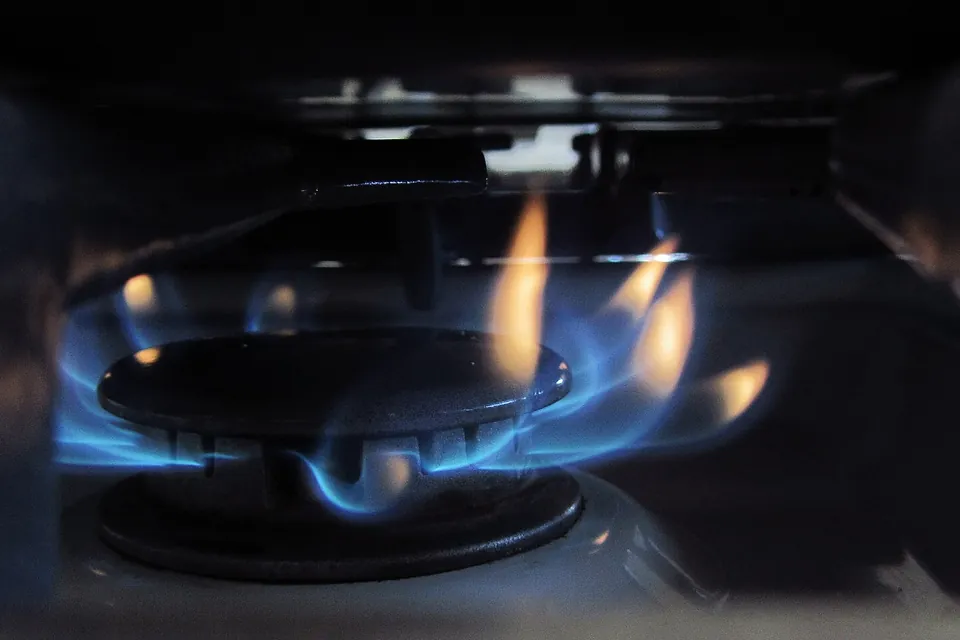
Gas burners give visible flame and instant response, and they suit woks and charring. They are less efficient than induction because much of the heat escapes around the pan, and burning gas indoors releases nitrogen dioxide, carbon monoxide and fine particles; the US Environmental Protection Agency recommends using a range hood vented outdoors whenever a gas stove is in use. Sealed burners are easier to clean than open ones; continuous cast-iron grates let you slide pans between burners. A dual-fuel range pairs a gas cooktop with an electric oven.
New layouts
- Flex or bridge zones combine two induction or radiant zones into one large area for griddles, fish kettles and oval roasters.
- Full-surface induction detects a pan anywhere on the glass and heats only beneath it.
- Modular ("domino") hobs are narrow units — a two-zone induction, a wok burner, a teppanyaki plate, a grill — that sit side by side to build a custom cooktop.
- Integrated downdraft hobs draw fumes down through a vent in the cooktop itself. They keep sightlines open on an island but capture less well than a good overhead hood, particularly with tall pots.
Sizes and placement
Common widths are about 24, 30 and 36 inches in North America and 60, 80 and 90 cm in Europe. A wider cooktop is useful only if you regularly use four or five pans at once; many cooks are better served by a 30-inch or 60 cm hob and more counter beside it. The NKBA planning guidelines recommend landing space on both sides of the cooktop and caution against placing it under an operable window or right beside a doorway. Check the manufacturer's installation guide for clearances to wall cabinets and combustible materials above.
Safety features worth having
- Automatic shut-off after a set time or when a pan is removed (standard on induction).
- Child locks for touch controls.
- Residual heat indicators on electric hobs.
- Flame-failure devices that cut the gas if a flame goes out.
- Controls placed where children cannot easily reach them and where you do not have to reach over hot pans.
The National Fire Protection Association reports that cooking is the leading cause of home fires and home fire injuries in the United States, and that unattended cooking is the leading factor. Whatever the technology, stay in the kitchen while frying or grilling.
Ventilation
Every cooktop produces grease, moisture and fine particles, and gas adds combustion gases. A ducted hood at least as wide as the cooktop, mounted at the height the manufacturer recommends, captures them best. Under the International Residential Code, hoods exhausting more than 400 cubic feet per minute generally require make-up air. See our article on contemporary kitchens for hood types, and appliance trends for the wider shift to electric cooking.
Choosing
If you cook often and want speed, precision and easy cleaning, induction is hard to beat, provided your cookware is compatible and the electrical supply allows it. If budget is tight, radiant glass-ceramic is a solid choice. If you love wok cooking or charring over flame and will vent properly outdoors, gas remains an option. Modular hobs let you mix them.
Sources
- ENERGY STAR, Emerging Technology Award 2021: residential induction cooking tops.
- US Environmental Protection Agency, "Nitrogen Dioxide's Impact on Indoor Air Quality".
- UL 858, Standard for Household Electric Ranges (coil-element temperature limiting requirement, 2019).
- National Fire Protection Association, "Home Cooking Fires" research report.
- National Kitchen & Bath Association, Kitchen Planning Guidelines with Access Standards; International Residential Code, section M1503.
Last reviewed: 6 November 2026.