Slate kitchen countertops: properties, sourcing, finishing and care

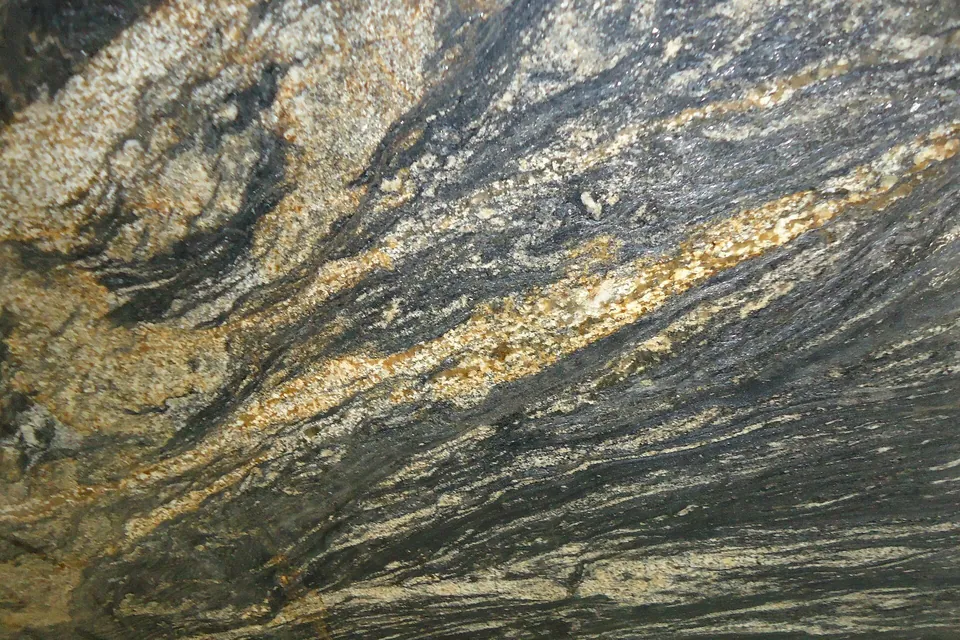
Slate is the quiet alternative among natural stone countertops. It has none of the sparkle of granite or the veining of marble; instead it offers a soft, matte surface in charcoal, green, plum or blue-grey, a cool and slightly velvety touch, and a reputation — earned in laboratory benches and school blackboards — for shrugging off chemicals and stains. It is not for everyone, because it scratches more easily than granite. This guide covers what makes slate distinctive and what to check before choosing it. For a broader view of natural stone, see our guide to granite and stone countertops.
What slate is
Slate is a fine-grained metamorphic rock. It began as clay and silt laid down in ancient seas, which hardened into shale and was then compressed and heated during mountain building. The pressure realigned its mineral grains into parallel planes, which is why slate splits into thin, flat sheets — the property that made it the classic roofing material. Its colour comes from its minerals: iron oxides give reds and purples, chlorite gives greens, and carbon gives dark greys and blacks.
Where it comes from
Slate has been quarried for centuries in North Wales, where the slate landscape of the north-west was inscribed as a UNESCO World Heritage Site in 2021; in the "Slate Valley" along the border of Vermont and New York; in Virginia and Pennsylvania; in Spain, Brazil, China and India. Properties vary considerably between quarries and even between beds in one quarry. Slates intended for countertops should be dense, sound and low in absorption; softer, flakier slates suited to flooring or decoration are not necessarily suitable for kitchen work surfaces.
Standards and testing
In North America, ASTM C629, the Standard Specification for Slate Dimension Stone, sets requirements for slate used in building, including limits on water absorption and minimum strength, and distinguishes exterior and interior grades. Reputable suppliers can tell you the quarry of origin and provide test data. As with any stone, take a sample home and test it: water, oil, lemon juice, wine and coffee left for fifteen minutes, and a key or knife drawn lightly across it to see how easily it marks.
How slate behaves in a kitchen
- Stains: dense countertop slates absorb very little water and resist most stains without any sealer. Oil may darken the surface temporarily before evaporating or being wiped away.
- Acids and chemicals: slate is largely made of silicate minerals rather than calcite, so lemon juice and vinegar do not etch it the way they etch marble or limestone. That chemical resistance is why slate was long used for laboratory benches.
- Heat: slate tolerates hot pans well, although sudden concentrated heat can stress any stone, so trivets remain a good habit.
- Scratches: slate is softer than granite and quartz. Knives and the base of a ceramic pot can leave light scratches, especially on darker slates where they show as pale lines. Many owners accept them as patina; light scratches can often be rubbed out with a fine abrasive pad, or disguised with a wipe of mineral oil.
- Chipping: edges and corners can chip under a sharp knock. An eased or rounded edge resists this better than a crisp square arris.
Finishes and appearance
Countertop slate is usually honed, giving a smooth matte surface. A light coat of mineral oil deepens the colour and evens out fingerprints and minor scratches; it is optional and needs renewing from time to time. Some slates have subtle veins of quartz or colour shifts across the slab. Slate slabs are typically smaller than granite slabs, so a long run may need more seams; ask the fabricator where they will fall.
Sinks and drainboards
Slate's water resistance made it a traditional material for sinks in schools, laboratories and farmhouse sculleries. Fabricators can build integral slate sinks, or cut drainboard grooves into the countertop beside an undermount sink so water runs back into the basin. Both are durable details that suit traditional, farmhouse and contemporary kitchens alike. If you are considering a sink of another material, our sink guide and our article on farmhouse sinks cover the alternatives.
Slate with other materials
Dark slate pairs well with pale painted cabinets, oak and white tile, giving strong contrast in a traditional kitchen. In a contemporary kitchen, slate with flat-panel cabinets and stainless steel reads as quietly industrial. In a Tuscan or rustic kitchen, green or plum slate sits comfortably with terracotta and wood. It also works as a single surface — an island top or a baking station — alongside a harder stone on the main runs.
Fabrication and health
Cutting and polishing any stone produces dust. Slate contains crystalline silica in varying amounts, and the US Occupational Safety and Health Administration's respirable crystalline silica standard requires employers to control dust from stone work, typically with water-fed tools, ventilation and respiratory protection. Asking a fabricator how they protect their workers is reasonable. Once installed, a slate countertop releases no dust in normal use.
Care routine
- Wipe daily with warm water and a mild dish soap; dry to avoid water marks on dark stone.
- Avoid abrasive powders, which dull the honed surface.
- Use cutting boards; slate blunts knives and shows scratches.
- Oil occasionally with mineral oil if you like a darker, even look.
- Rub out light scratches with a very fine abrasive pad, then oil the area.
Is slate right for you?
Slate suits people who want a natural stone with a matte, understated look, who value stain and acid resistance and who are relaxed about a surface that collects light marks over time. If you want a pristine, scratch-free surface, a harder granite or quartzite may suit you better.
Sources
- ASTM International, ASTM C629, Standard Specification for Slate Dimension Stone.
- UNESCO World Heritage Centre, "The Slate Landscape of Northwest Wales" (inscribed 2021).
- US Geological Survey, information on metamorphic rocks and dimension stone.
- US Occupational Safety and Health Administration, respirable crystalline silica standard.
Last reviewed: 6 November 2026.