Types of farmhouse kitchen sinks: Belfast, London, apron-front and retrofit
"Farmhouse sink" covers several related designs with different histories, sizes and installation needs. Some are true traditional ceramic sinks; others are modern apron-front basins in steel or stone; some are made to fit cabinets that were never designed for them. Knowing the types helps you choose the right one for your kitchen and your cabinets. For installation sequence, cabinet support, ergonomics and daily care, see our companion guide to living with a farmhouse sink.
The Belfast sink
The Belfast sink is a deep, rectangular, fireclay sink, originally made in Britain and Ireland and associated with the linen and dairy industries around Belfast, where plentiful water allowed a deep basin. Its defining feature is a built-in overflow, often a weir slot at the back, which prevents water spilling over the front. Belfast sinks are usually set on brackets or a cabinet with the front exposed and the top projecting slightly above or set flush with the countertop.
The London sink
The London sink looks similar but is traditionally shallower and has no overflow, a design associated with places where water was scarcer and dearer. The shallower bowl is easier on the back but holds less water. Many modern ceramic sinks sold under either name blur the distinction, so check depth and overflow in the specifications rather than relying on the name.
The modern apron-front sink
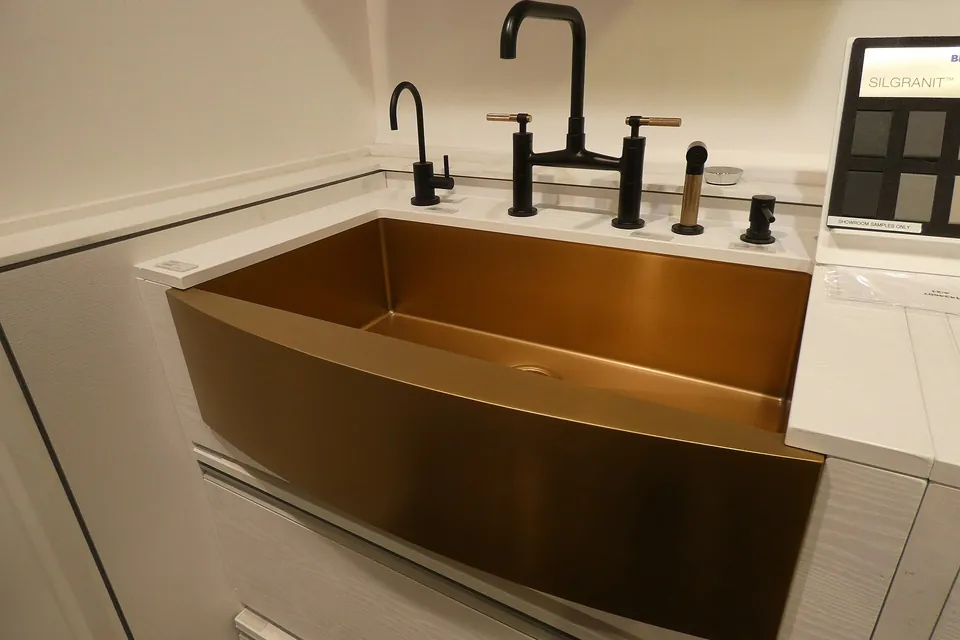
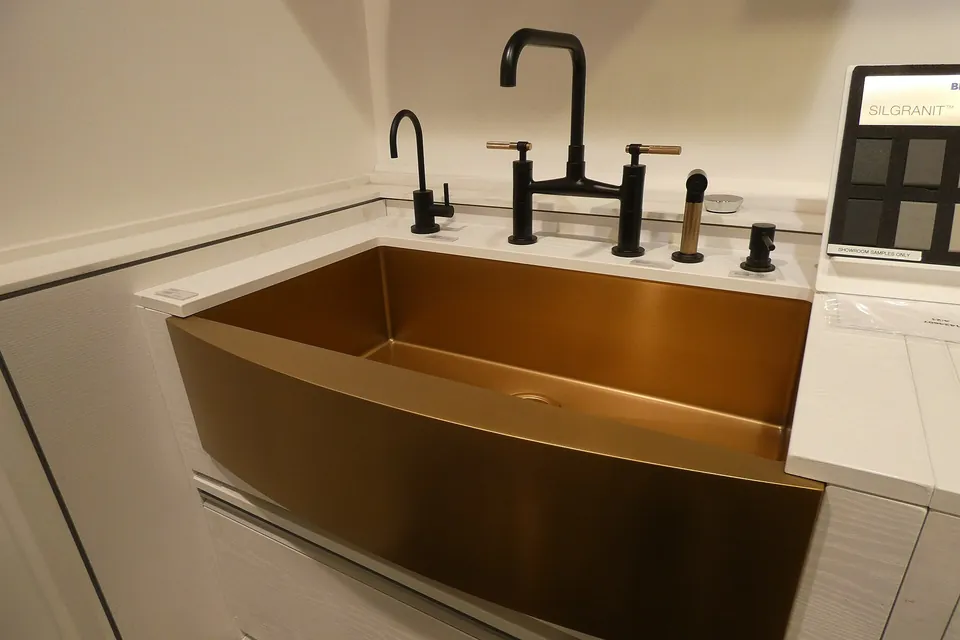
In North America, "farmhouse" or "apron-front" usually means any sink with an exposed front panel, in fireclay, enamelled cast iron, stainless steel, copper, composite or stone. Variations include:
- Flat or fluted fronts: a plain apron suits contemporary kitchens; a fluted or decorated apron suits traditional ones.
- Reversible fronts: some fireclay models have a plain face on one side and a decorated face on the other, letting you choose at installation.
- Undermount-style apron sinks: the countertop overlaps the rim on three sides, for a clean wipe into the basin.
- Workstation apron sinks: stainless models with ledges for cutting boards, racks and colanders.
Retrofit apron sinks
Standard apron-front sinks need a dedicated or modified cabinet. Retrofit models are designed to replace an existing undermount or drop-in sink in a standard sink base with minimal cabinet work: they have a shorter apron that sits in the space of the false drawer front. They can save a full cabinet replacement, but you will usually still need to modify the countertop opening, so a stone fabricator is involved. Check the manufacturer's cut-out template against your cabinet before buying.
Single, double or offset bowls
- Single bowl: the classic and most common farmhouse configuration, best for large pans, baking sheets and bathing small dogs.
- Double bowl: two equal basins, or a larger and a smaller basin, for soaking in one and rinsing in the other.
- Offset drain: a drain placed towards the back or one side leaves more flat space at the bottom of the bowl and more room for plumbing and a waste disposer underneath.
Sizes
Farmhouse sinks are commonly made in widths of roughly 24 to 36 inches (60 to 90 cm), with the most popular around 30 to 33 inches. Depths of the bowl range from a shallower 8 inches to 10 inches or more. Wider is not always better: a very large sink takes counter space away from preparation, and a deep bowl means bending. The NKBA planning guidelines recommend landing space on both sides of the sink, so check that your chosen width leaves enough counter.
Materials at a glance
| Material | Strengths | Watch for |
|---|---|---|
| Fireclay | Hard glossy glaze, classic look, stain-resistant | Heavy; can chip; size tolerance from firing |
| Enamelled cast iron | Very durable, quiet, deep colour | Very heavy; enamel can chip |
| Stainless steel | Light, unbreakable, workstation options | Shows scratches and water spots |
| Composite | Matte colours, quiet, scratch-resistant | Check heat limits |
| Copper | Distinctive living patina | Changes colour; gentle cleaners only |
| Stone or slate | Can match the countertop; very durable | Heavy; porous stones need sealing |
Slate, traditionally used for scullery sinks, is a particularly durable choice; see our article on slate countertops and sinks.
Accessories worth considering
- Bottom grids in stainless steel protect fireclay and enamel from heavy pans and keep glassware off the hard base.
- Basket strainers with a good seal; ceramic sinks often take a standard 3½-inch kitchen drain, but check the specifications.
- Cutting boards and colanders sized to sit across or inside the bowl, which turn a deep single basin into a prep station.
- Drainboards in the countertop beside the sink, grooved so water runs back into the basin — a traditional companion to Belfast sinks.
Ask whether accessories are made for your exact model; fireclay sinks vary slightly in size, so universal grids may not sit flat.
Faucets for farmhouse sinks
Farmhouse sinks normally have no faucet holes. Options include:
- Bridge faucets with two handles connected by a bar, a traditional match for Belfast sinks.
- Wall-mounted faucets above the sink, which keep the counter clear but need supply lines in the wall.
- Single-lever pull-down faucets, practical for rinsing a deep, wide bowl.
Check that the spout reaches the centre of the bowl and is high enough for your largest pot. Our kitchen faucet guide covers valves, reach, sprays and finishes.
Matching sink to kitchen
A white fireclay Belfast or apron sink with a bridge faucet suits French country and traditional kitchens; a stainless apron workstation sink suits busy cooks and contemporary rooms; a copper or stone sink makes a statement in a rustic kitchen. Whatever the type, choose the sink before the cabinets are ordered and the countertop is templated.
Sources
- Sink manufacturers' specification sheets and installation templates (dimensions, overflow, retrofit cut-outs).
- National Kitchen & Bath Association, Kitchen Planning Guidelines with Access Standards (sink landing area).
Last reviewed: 6 November 2026.