Granite and natural stone countertops: what to know before you buy
Granite has been one of the most popular countertop materials for decades, and for good reasons: it is hard, heat-tolerant, long-lived and every slab is different. But "granite" in a showroom covers a wide range of stones with different properties, and the way a top is selected, fabricated and installed matters as much as the stone itself. This guide explains what to look for, how granite relates to other natural stones such as slate, and what is known about two health questions often raised: radon and silica dust.
What "granite" means in a showroom
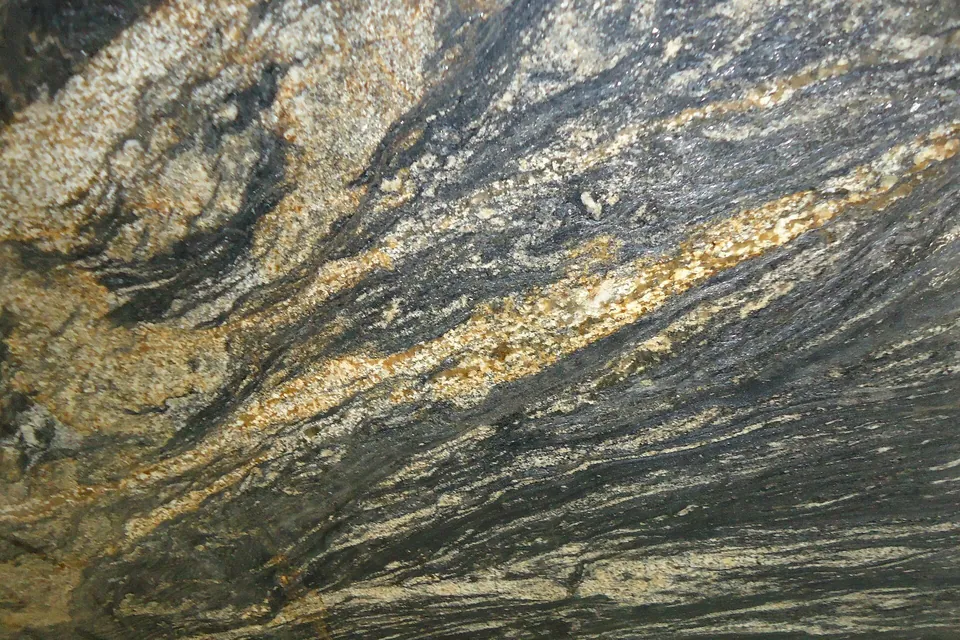
Geologically, granite is an igneous rock made mostly of quartz and feldspar. Commercially, the word is used more loosely for many hard, crystalline stones, including some gneisses and other rocks. The practical consequence is that two "granites" can differ in porosity, hardness and how they respond to stains. Ask the supplier for the stone's origin and for its care recommendations, and test a sample at home: put drops of water, oil, lemon juice and red wine on it, leave them for fifteen minutes and see what marks remain.
Choosing a slab
- See the actual slabs. Natural stone varies from slab to slab and even across one slab. Visit the stone yard, select your slabs and ask to see how the pieces of your countertop will be laid out on them.
- Thickness. Slabs are commonly sold in 2 cm and 3 cm thicknesses. Thicker slabs are stiffer and can span wider overhangs; thinner ones are often laminated at the edge to look thicker and may need a plywood substrate.
- Finish. Polished finishes deepen colour and resist stains best. Honed (matte) and leathered (textured) finishes look softer and hide fingerprints, but may need sealing more often.
- Seams. Most kitchens need at least one seam. Ask where the fabricator plans to put it — ideally away from the sink and cooktop — and how they match the pattern across it.
Fabrication and installation
Stone tops are measured from the installed base cabinets, either with physical templates or with digital measuring equipment. Cabinets must be level and fixed before templating; a gap of a few millimetres at the wall is normal and is covered by the backsplash. Cut-outs for the sink and cooktop are made in the shop, so have the exact sink and cooktop models — and their cut-out specifications — chosen before the template appointment.
Check how the fabricator supports overhangs for seating. Stone is strong in compression but can crack under bending loads; fabricators specify the maximum unsupported overhang for each thickness and require brackets beyond it.
Living with granite
Granite tolerates heat well, but sudden, concentrated heat can stress a stone or its seams and resin fills, so trivets are still a good habit. It resists scratching from ordinary kitchen knives, though it will blunt them; use a cutting board. Many granites benefit from periodic sealing with an impregnating sealer; the water test — if water darkens the stone within a few minutes, it is time to reseal — is a simple guide. Clean with mild dish soap and water. Avoid harsh acids and abrasive cleaners, which can dull the finish and break down sealers.
Other natural stones
Quartzite
True quartzite is a metamorphic rock formed from sandstone and is generally very hard. Some stones sold as quartzite are in fact softer marbles or dolomites. The same home tests — and a scratch test with a glass edge, which true quartzite resists — help sort them out.
Marble
Marble is softer and reacts with acids, which leave dull etch marks even when the surface is sealed. Many people accept the patina that develops; others reserve marble for a baking area or an island that sees less heavy use.
Slate
(Our slate countertop guide covers this stone in depth.) Slate is a fine-grained metamorphic rock with a matte, velvety surface, usually in dark greys, greens or purples. Dense slates absorb little water and resist stains, and many need no sealing at all. Slate is softer than granite, so it can scratch, but light scratches in a honed slate can often be rubbed out with a fine abrasive pad and oil. It suits traditional and contemporary kitchens alike and is a natural choice for a sink area. As with granite, quality varies by quarry, so buy from a supplier that can tell you where the stone comes from.
Soapstone
Soapstone is soft but chemically inert: acids do not etch it. It scratches easily, but scratches can be sanded out, and it darkens attractively with mineral oil.
Engineered stone and sintered stone
Engineered stone, often called quartz, is made from crushed quartz bound with resin. It is non-porous, consistent in colour and needs no sealing, but resin can scorch under very hot pans and some colours yellow in strong sunlight. Sintered stone and ultra-compact surfaces are made by fusing minerals at high temperature and pressure; they are highly resistant to heat, stains and UV light but can chip at edges.
Radon and silica: what the evidence says
Radon. Some granites contain small amounts of naturally radioactive elements. The US Environmental Protection Agency states that while some granite countertops may emit radon, the amount is generally small next to the radon that enters a home from the soil beneath it. The EPA's advice is to test the home's air for radon — the main source being the ground — and to fix high levels if found.
Silica. The real health risk with stone countertops is to the people who cut and polish them. Cutting, grinding and polishing stone releases respirable crystalline silica, which can cause silicosis, an incurable lung disease. Engineered stone contains far more crystalline silica than most natural stone. In 2023 the US Centers for Disease Control and Prevention reported cases of severe silicosis, including deaths, among engineered-stone fabrication workers in California, and Australia banned the use and import of engineered stone from July 2024. In the United States, OSHA's respirable crystalline silica standard requires employers to control dust, for example with water-fed tools and ventilation. When you choose a fabricator, it is reasonable to ask how they protect their workers; once installed, a countertop does not release silica in ordinary use.
Sources
- US Environmental Protection Agency, "Radon and Granite Countertops" (radon questions and answers).
- US Centers for Disease Control and Prevention, Morbidity and Mortality Weekly Report, July 2023, "Severe Silicosis in Engineered Stone Fabrication Workers — California, Colorado, Texas, and Washington, 2017–2022".
- US Occupational Safety and Health Administration, respirable crystalline silica standard (29 CFR 1926.1153 and 1910.1053).
- Safe Work Australia, prohibition on the use of engineered stone (from 1 July 2024).
Last reviewed: 6 November 2026.