Range hoods explained: how much extraction you need, ducting, make-up air and noise
The range hood is the appliance most often chosen by eye and regretted by ear. It is bought to match the cabinets, sized by the width of the cooktop, and then left switched off because it roars. Yet it does a job nothing else in the kitchen does: it removes the steam, grease, smoke and combustion gases that cooking puts into the air of your home. With the holiday cooking season under way, here is how to choose one that actually does that job, without overspending on airflow you cannot use.
What a hood is for
Cooking releases moisture, grease droplets, fine particles and odours, and a gas burner adds combustion products such as nitrogen dioxide. The US Environmental Protection Agency lists gas stoves among the main indoor sources of nitrogen dioxide and its first advice is simple: "Install and use an exhaust fan vented to outdoors over gas stoves." Electric and induction cooktops produce no combustion gases, but the steam, grease and particles from the food are the same.
The key idea is capture. A hood does not clean the room; it catches what rises from the pans before it spreads. As the builder Malcolm Taylor put it in a reader discussion on Green Building Advisor, "the strategy isn't to suck the contaminants out of the air, it's to catch them in the hood". That is why the shape, size and position of the hood matter as much as the fan inside it.
How much airflow: the per-foot rule
Hood airflow is rated in cubic feet per minute (CFM). The most widely used reference for homes comes from the Home Ventilating Institute (HVI), the trade body that tests and certifies residential ventilation products. Its recommended rates, reproduced in a builder brief from the Pennsylvania Housing Research Center at Penn State, are expressed per linear foot of cooktop:
| Hood position | Recommended, per foot of cooktop | Minimum, per foot of cooktop | Example: 30-inch (2.5 ft) cooktop |
|---|---|---|---|
| Against a wall | 100 CFM | 40 CFM | 250 CFM recommended |
| Over an island | 150 CFM | 50 CFM | 375 CFM recommended |
Island hoods need more because air can sweep in from every side and carry the plume away from the canopy. High-output professional-style gas ranges are a different case: their makers specify the exhaust they need, and the Penn State brief advises following those specifications rather than the per-foot rule. For a typical home cooktop, though, 250 to 400 CFM covers most needs, and a hood rated at 1,000 CFM over a four-burner range mostly buys noise and heating bills.
When you compare models, look for an HVI-certified rating. The HVI directory lists the airflow and noise measured in testing, not the figure printed on the box.
Width, depth and height: where capture is won
- Width: the hood should be at least as wide as the cooktop, and ideally a few inches wider on each side, especially over an island or at a higher mounting height.
- Depth: a deep canopy that covers the front burners catches far more than a slim visor. If you buy a shallow hood, cook on the back burners, which sit directly under the fan.
- Height: the lower the hood, the better it captures, within the limits set by the manufacturer and local code, often around 24 to 30 inches above an electric cooktop and a little more over gas. Check the installation manual of your model before the cabinets are hung.
- Shape: a canopy with a hollow underside works as a reservoir, holding a burst of steam long enough for the fan to clear it.
These points also shape the room. An island cooktop, for example, needs a heavier and more powerful canopy than a wall run, and a ceiling route for the duct; our guide to planning a kitchen island covers the clearances.
Ducted or recirculating?
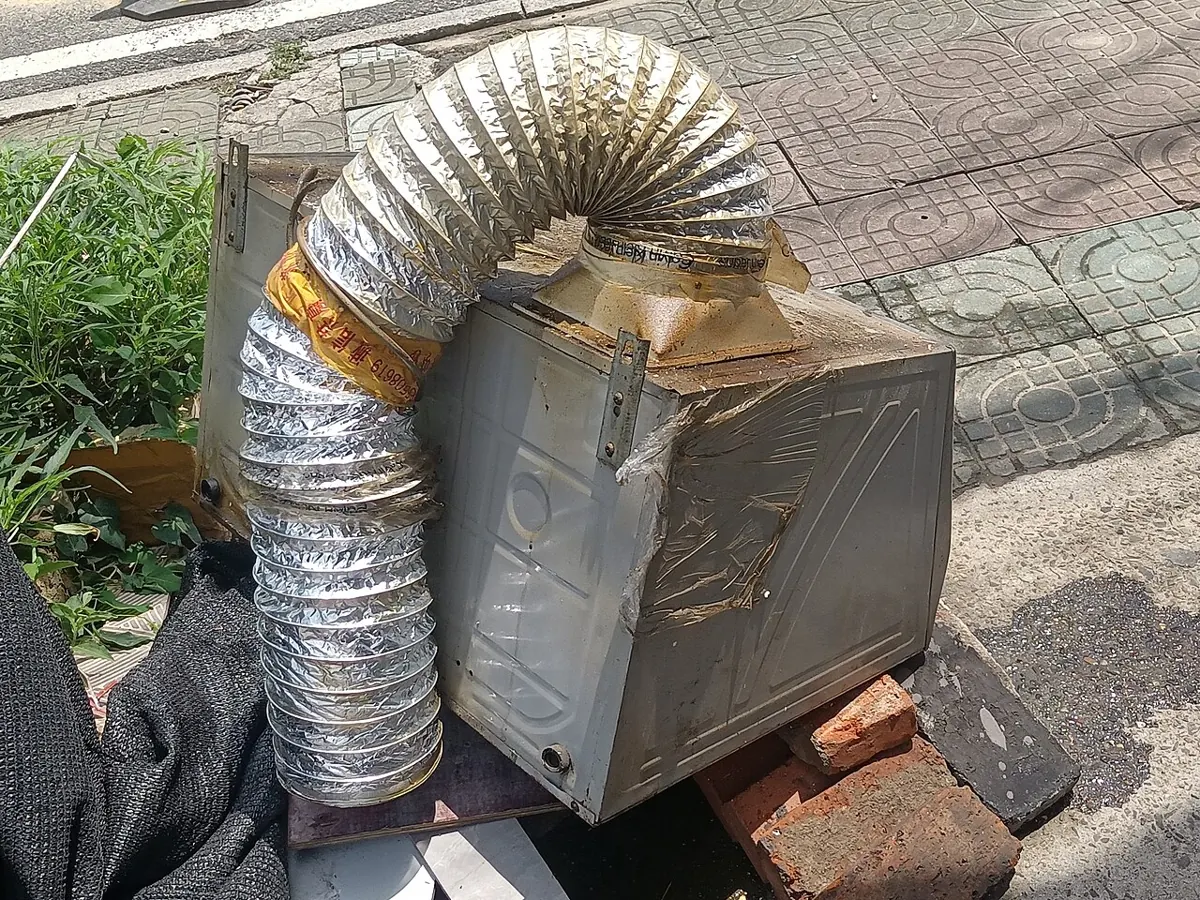
A ducted hood sends the air outdoors. It is the only type that removes moisture, heat and combustion gases, and it is the one to choose whenever a duct can reach an outside wall or the roof. Keep the duct the diameter the manufacturer specifies, as short and straight as possible, in smooth metal rather than flexible foil, and finish it with an exterior cap fitted with a backdraft damper. Every elbow and every metre of duct reduces the real airflow.
A recirculating hood passes the air through a grease filter and a charcoal filter and returns it to the kitchen. It traps some grease and odours, but it does not remove steam or nitrogen dioxide. It is a fallback for flats where no duct is possible, and its charcoal filters must be replaced regularly to do anything at all.
Make-up air: the rule above 400 CFM
Air that leaves the house has to be replaced. In a leaky old house it seeps in through gaps; in a tight modern one, a powerful hood can depressurise the home, pulling air back down a chimney or the flue of a water heater. For that reason the International Residential Code, in its chapter on exhaust systems, requires make-up air for kitchen exhaust hoods capable of more than 400 CFM, at a rate approximately equal to the exhaust. The Penn State brief notes that depressurisation can occur at almost any exhaust rate in a tight house and recommends that make-up air be delivered within about 10 °F of room temperature to avoid cold drafts.
Make-up air can come from a dedicated opening with a motorised damper that opens when the hood runs, or from a fan-assisted unit tied into the heating system. Fine Homebuilding and the Journal of Light Construction describe both approaches in detail. Either way, it adds cost and complexity, which is one more reason to size the hood to the cooking rather than to the catalogue. Outside the United States the rules differ; check the building regulations where you live.
Noise: the hood you will actually use
Noise is usually given in sones, where 1 sone is roughly the hum of a quiet refrigerator and each doubling of the number sounds twice as loud. A hood that is pleasant at its everyday speed will be switched on; one that shouts will not. Two tips help: a hood sized a step larger and run at medium speed is often quieter than a smaller one at full speed, and a larger, smoother duct reduces both resistance and noise. Some models place the fan motor in the duct run or outside the house to keep the sound away from the kitchen.
A short checklist before you buy
- Measure the cooktop and decide wall or island: that gives your target airflow.
- Choose a hood at least as wide as the cooktop, and as deep as the cabinets allow.
- Plan the duct route to the outside before choosing the model, and note its diameter.
- If the hood exceeds 400 CFM, budget for make-up air and talk to your installer about it.
- Compare certified airflow and sones, not marketing figures.
- Turn it on every time you cook, and for a few minutes after.
For the cooktop itself, see our guide to induction, gas and radiant hobs; for where the hood fits in the wider project, our step-by-step remodeling plan.
Sources
- Pennsylvania Housing Research Center, Kitchen Ventilation Systems, Part 2: Providing Adequate Makeup Air, Builder Brief, April 2012 (HVI table, make-up air guidance).
- International Code Council, International Residential Code 2024, chapter 15, Exhaust systems.
- US Environmental Protection Agency, Nitrogen dioxide's impact on indoor air quality.
- Green Building Advisor, Sizing a kitchen exhaust fan.
- Fine Homebuilding, The basics of makeup air; Journal of Light Construction, Makeup air for kitchen range hoods.
- Home Ventilating Institute, certified product directory.
 Surfaces & fixtures
Kitchen cooktops
Induction, radiant, gas and modular hobs, sizes, safety and ventilation.
 Planning & layout
Planning a kitchen island
Aisle widths, seat spacing, sinks and cooktops in islands, and lighting.
 Planning & layout
Kitchen remodeling, step by step
Priorities, budget, permits, older-home hazards and the order of work.